

AI path to success
Will our work environment be unrecognizable in one year, or will AI fall short once more?
Reading how AUDI AG deployed an AI-powered self-service assistant in just two weeks confirmed we've crossed a point of no return.
Not only was the timing astounding for a company that size, but it was a total success as they reported faster access to information, less routine queries, and more time for teams to focus on meaningful, high-value work.
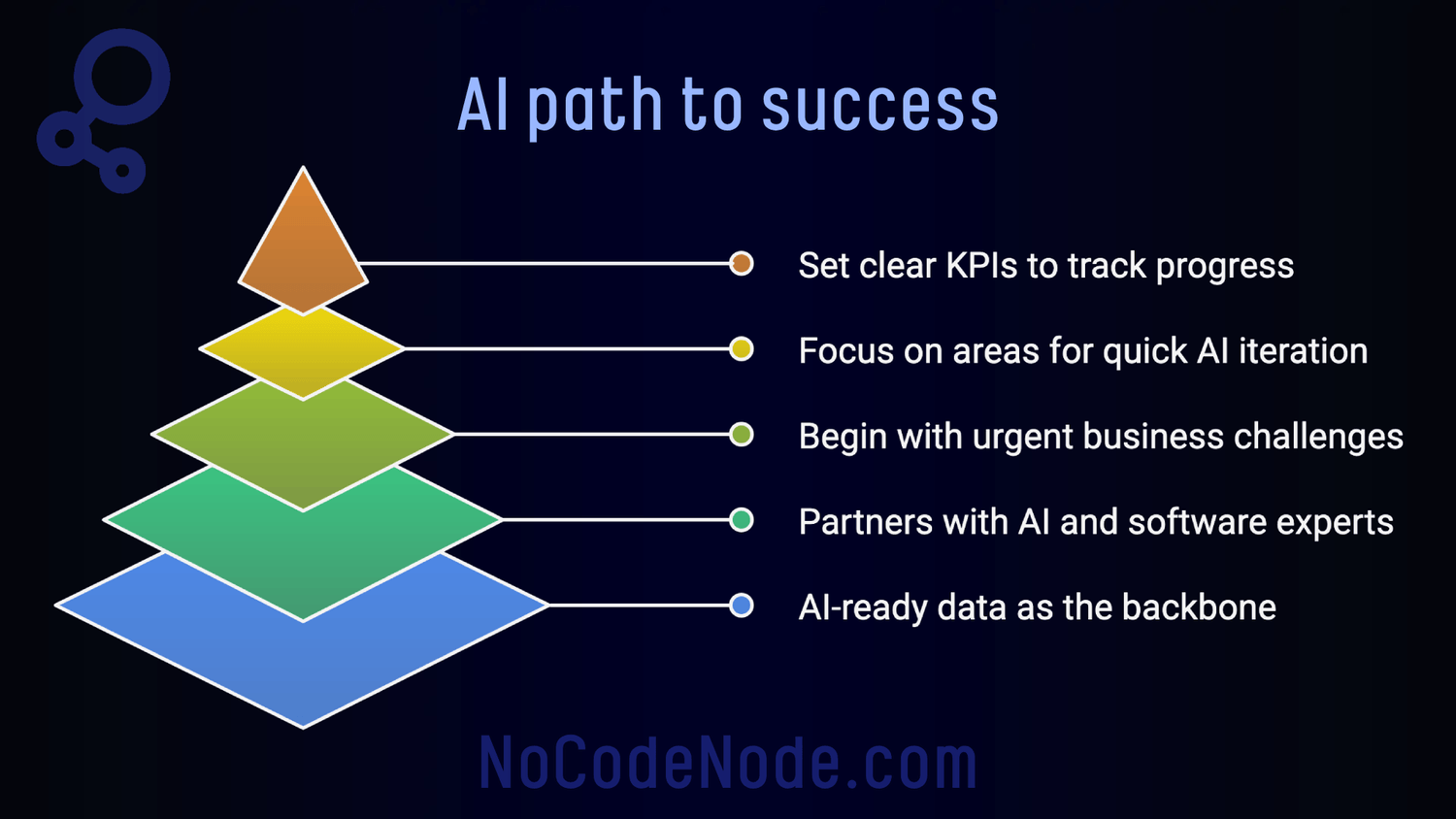
And guess what? You don't need Audi's resources to start. Here are 5 proven keystones from AI industry leaders that actually work:
1️⃣ - Fight against siloed systems. Fragmented data inevitably leads to crippled automation. Your AI Agents will be as smart as your data is organized. You want all your IT and OT (operational technology) organized and equally accessible. This determines your foundation's quality.
2️⃣ - AI alone is only a chat assistant. Without proper system integration, error handling, and business logic, it's just hacky prompt engineering. This is the very reason why no-code automation suffers from a bad reputation. Seasoned systems architects bridge the gap between robust automation and brittle hacks.
3️⃣ - Starting small seems obvious, but the main goal here is to earn trust. You will face adversity in your company. The fear of being replaced and concerns about constantly monitoring AI work are two common valid objections.
Recently we implemented a sorting system for customer support. Results: 60% fewer repetitive tickets, average response time 12x faster, and the support team now focusing on refund disputes and product feedback. The support team mood improved. Customer satisfaction went up. And leadership saw ROI in week one.
4️⃣ - Sandbox your AI. Start with read-only access. Let AI suggest actions, not execute them. Monitor every action. Require human approval. Iterate as much as possible. Once your trial period ends with near-perfect accuracy, expand access. Rapid iterations build trust in the system's reliability. Report or billing generation is a good way to start.
5️⃣ - KPIs or OKRs (Key Performance Indicators or Objectives and Key Results) are the keystones of AI measurement. Define clear success and failure metrics upfront: speed, quality, reliability, costs, and reproducibility. Set boundaries by asking what's considered better than a human.
Not sure where to start? Use the contact page and send me a message — I'll tell you if it's automation-ready.

Source of n8n automation workflows and related projects.




Stay ahead with n8n automation
Start receiving all the project updates. New workflows, YouTube video and micro SAAS options.
Source of n8n automation workflows and related projects.
Stay ahead with
n8n automation
Start receiving all the project updates. New workflows, YouTube video and micro SAAS options.
Copyright 2026 © All rights reserved.
Copyright 2026 © All rights reserved.